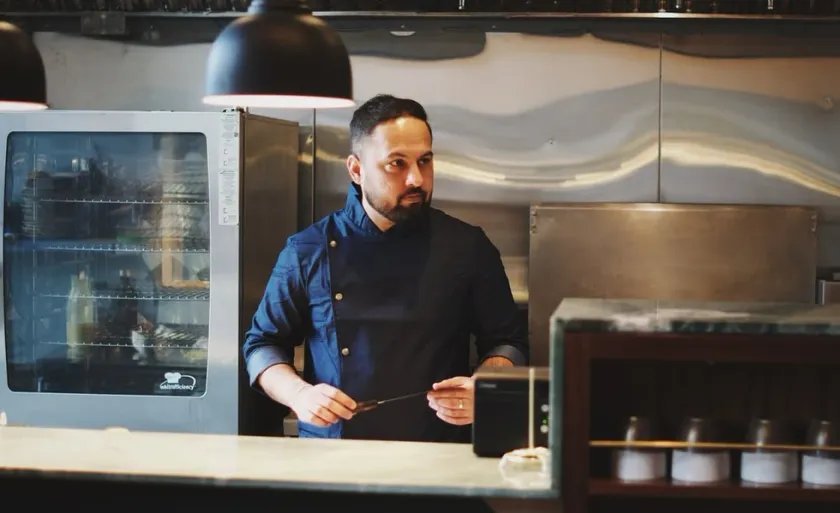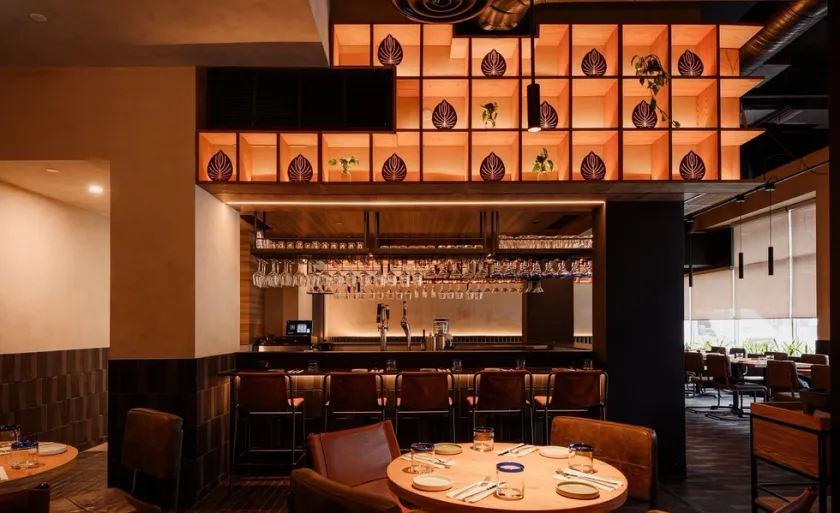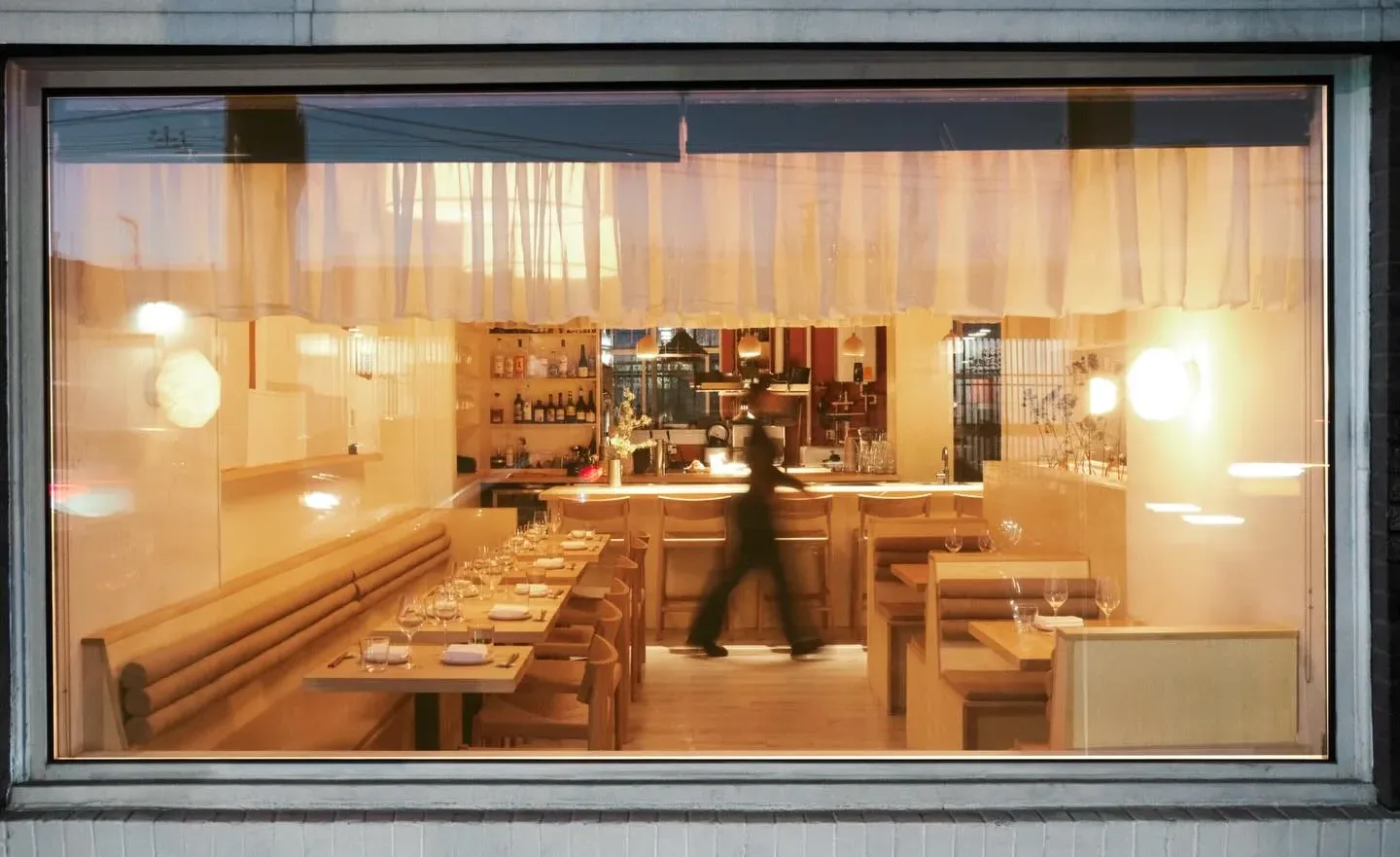
Niwa means garden in Japanese. There are chopsticks on the table, an omakase if you want one, and a drinks list that leans on sake.
By any normal test, the restaurant on Powell Street is a Japanese restaurant. Its owners won't say so.
"There are a lot of things about Niwa that nod to or seemingly feel a bit more Japanese," Miki Ellis has said, "but by no means do we want to be a Japanese restaurant."
That sounds at first like a restaurant dodging a box. It isn't. The reason sits upstream of the dining room, in how Darren Gee runs the kitchen.
The farms decide, not the menu
Gee cooks whatever the farms send him. Nearly all the produce and protein is local. Animals arrive whole, not as the neat cuts a menu would order, and whatever this kitchen can't use gets split with other kitchens.
"What we're really trying to do is tell the story of producers and the things that are happening around us seasonally," he has said. And more simply: "It's nice that the season and the ingredients dictate what you're going to make."
Follow that through and the label stops being possible.
A cuisine is a promise about what will be on the table. A Japanese restaurant is undertaking to have certain things, more or less, whenever you turn up. A kitchen that lets the season decide can't promise that, because in February it has no idea what March will bring.
What it can promise is narrower and harder: whatever does show up will have been worth cooking.
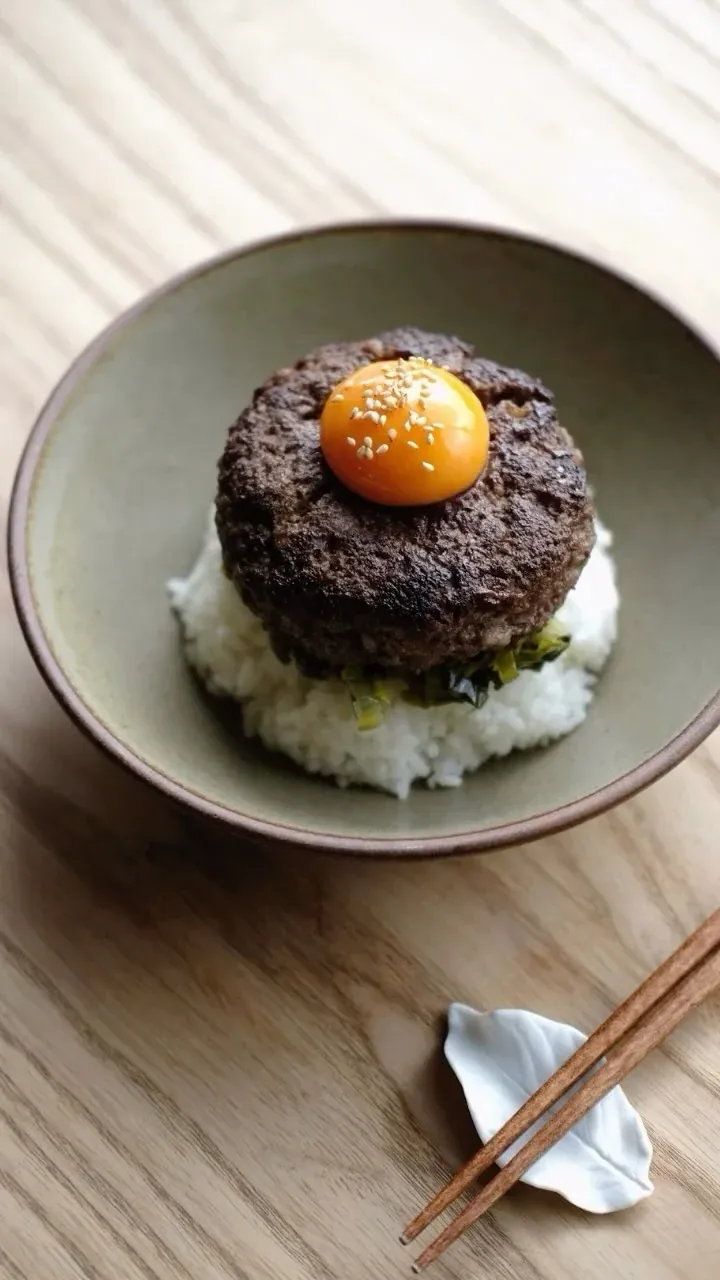
So where is the Japanese part?
In the technique and the seasoning, rather than in a category the menu has to keep faith with. Shio koji, which is rice mould and salt used to tenderise and deepen flavour. Yuzu kosho, a hot citrus paste. Bonito. A dashi.
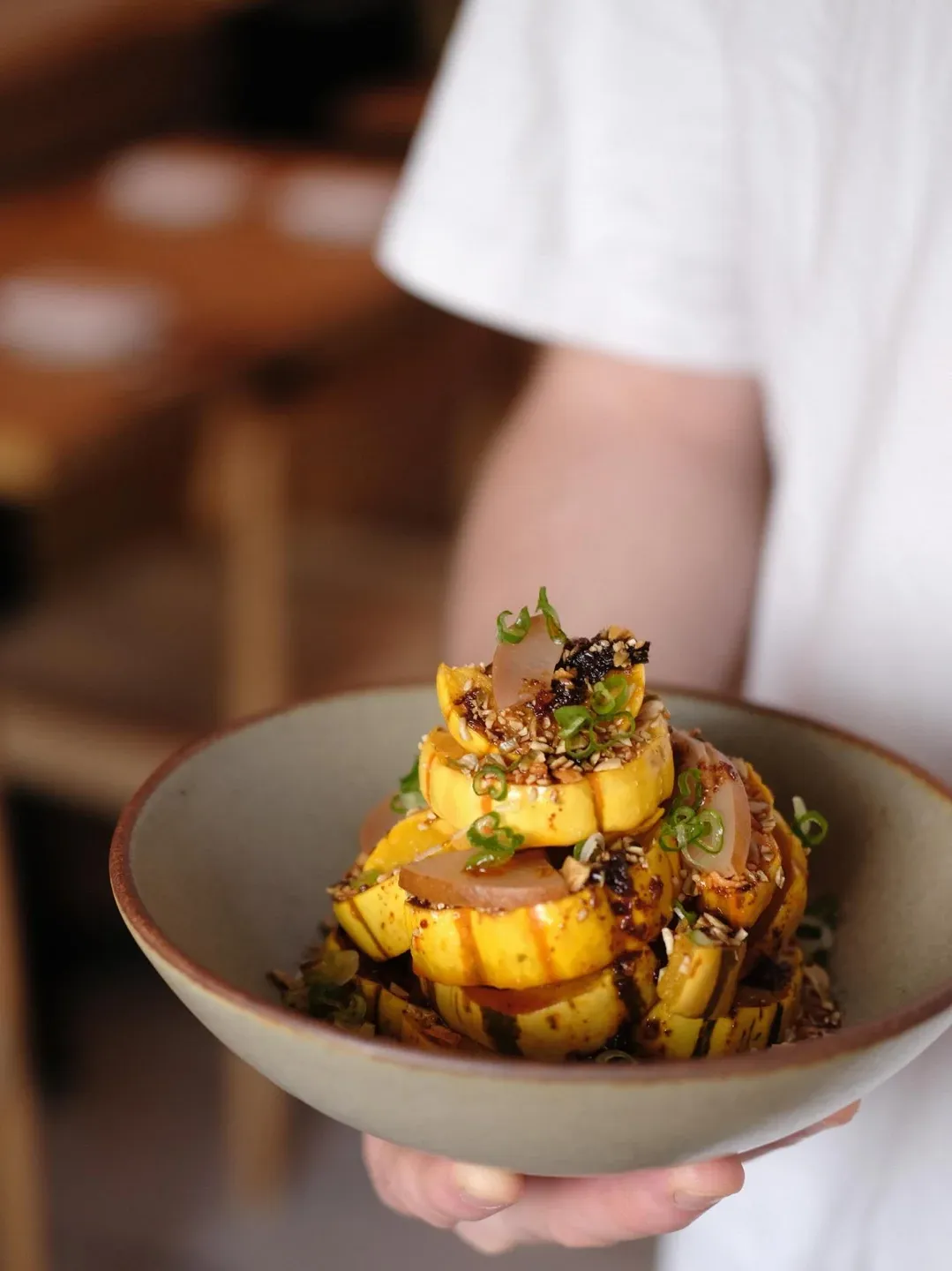
The kitchen has sent out charcoal-grilled leeks with shoyu butter. Pickles of yellow carrot, cucumber and white turnip. Hand-cut pasta with uni and kabocha. A duck breast aged five weeks.
Only some of those belong to any one cuisine. All of them belong to a particular week in Vancouver.
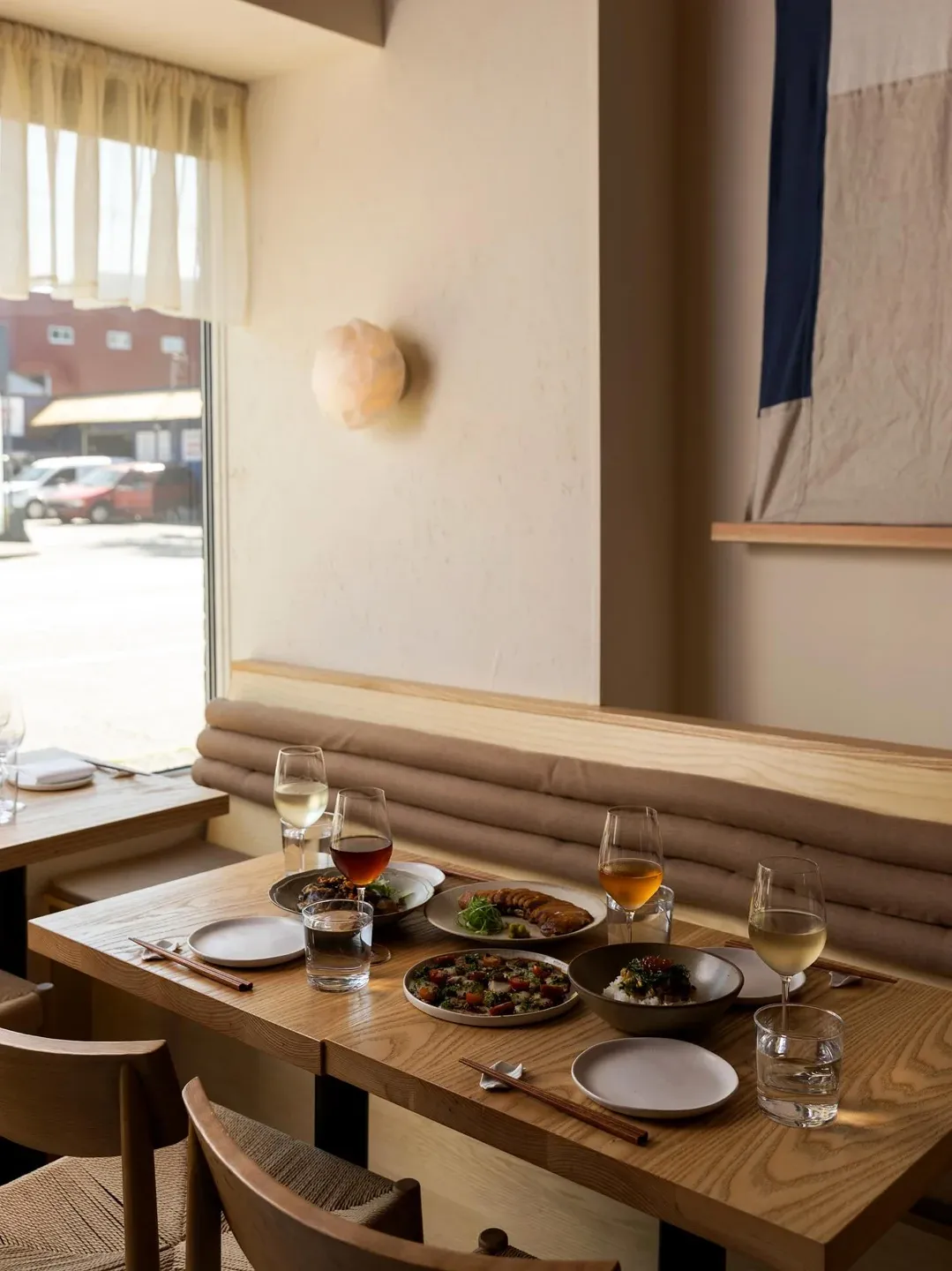
The room says the same thing quietly. Claire Saksun designed it, and it's plain and calm: a burnt terracotta ceiling over light wood and earth-toned fabric. It refuses to signal a country the way restaurant rooms usually do.
Who's behind it
Niwa opened in December 2024. Gee runs it with three partners, Robin Corbett, Miki Ellis and Stephen Whiteside, who came out of Dachi, Ugly Dumpling and Hānai between them.
Within a year, Air Canada enRoute placed it tenth on its list of Canada's best new restaurants. That's the strongest national showing of any room we've written about.
They got there without ever naming a cuisine. It's a harder way to run a restaurant, and a harder thing to explain to somebody deciding where to eat. Niwa joined Bravo in May, which mostly helps the people who were never going to look it up. The achievement is that enough people have stopped needing it explained.